

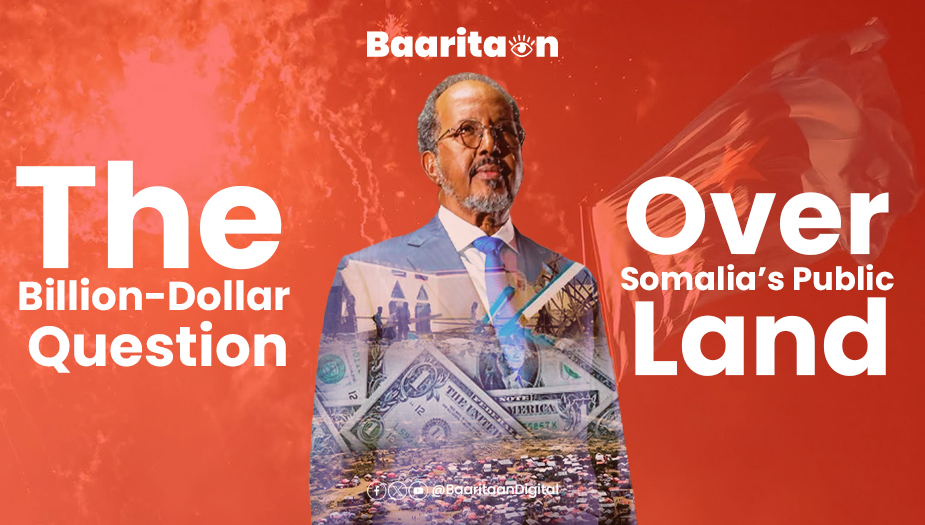

MOGADISHU — Somalia’s fragile state-building project has long depended on one central challenge: transforming public institutions in a country emerging from decades of conflict, displacement, and weak governance. A new investigation by Baaritaan has raised questions over one of the country’s most sensitive resources — public land — and whether state assets have been managed transparently during President Hassan Sheikh Mohamud’s second term administration.
According to Baaritaan’s investigation, more than 180 government-owned properties have been transferred to private buyers through processes that sources say failed to meet required legal standards. The sources interviewed by Baaritaan estimate that the combined value of the transactions exceeded $1 billion.
The investigation is based on interviews with ten sources, including government officials, opposition figures, independent researchers, diplomats based in Mogadishu, and residents who said they were affected by property transfers. Several sources requested anonymity due to the political sensitivity of the issue.
The Office of the President was contacted by Baaritaan for comment before publication but did not provide an official response to the allegations.
Public Assets in a Fragile State
In countries recovering from conflict, public land is not merely a financial asset. It is a symbol of state authority, institutional credibility, and the social contract between citizens and government.

Somalia’s public properties include ministry compounds, government agencies, municipal lands, and areas that have historically provided shelter for internally displaced populations. The management of these assets has become increasingly important as Mogadishu experiences rapid urban growth and rising demand for commercial land.
Somalia’s legal framework requires that public property sales follow procedures designed to protect state interests. These include establishing that government institutions no longer require the property, confirming that no other public agency needs the land, determining an official valuation, conducting transparent bidding, and ensuring revenues enter government accounts.
Sources interviewed by Baaritaan allege that these safeguards were not consistently followed in a number of transactions examined by the investigation.
The Politics of Land and Power
Land has historically been one of Somalia’s most politically contested resources. In a country where displacement remains widespread and institutions are still rebuilding, decisions over who controls valuable urban property can carry consequences far beyond economics.
Baaritaan’s sources allege that some public properties were transferred to business figures who later developed commercial projects on the sites. One government official interviewed by the outlet claimed that access to land was influenced by financial offers from private actors.
The controversy highlights a broader governance challenge facing Somalia: the tension between attracting investment in a rapidly developing capital city and ensuring that state assets are not diverted away from public interests.
Displacement and the Human Cost
The investigation also examines the impact on civilians who had occupied some public lands, including families displaced by conflict and insecurity.
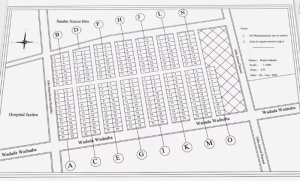
For many internally displaced Somalis, unused government land has become a last refuge after years of war and instability. Baaritaan also understand that some residents were removed from sites later transferred to private investors.
Opposition figures interviewed by Baaritaan alleged that police forces were involved in several eviction operations. The sources furthermore identified Banaadir regional police chief Moalim Mahdi as the key driver of the forced eviction.
The issue reflects a wider dilemma in post-conflict societies: governments often seek to restore control over state property while facing pressure to protect vulnerable populations who have nowhere else to go.
A Test for Somalia’s Institutions
The allegations surrounding public land sales come at a critical moment for Somalia, where international partners continue to support state-building efforts, security reforms, and economic development.
For donors and policymakers, questions surrounding public asset management are closely linked to broader concerns about transparency, corruption risks, and institutional accountability.
The central question now facing Somalia is not only who controls its land, but whether public institutions can demonstrate that national assets serve public interests rather than private gain. Baaritaan’s investigation presents allegations that require further scrutiny, documentary review, and official accountability processes. The long-term implications will depend on whether Somali institutions respond with transparency, investigation, and credible oversight.